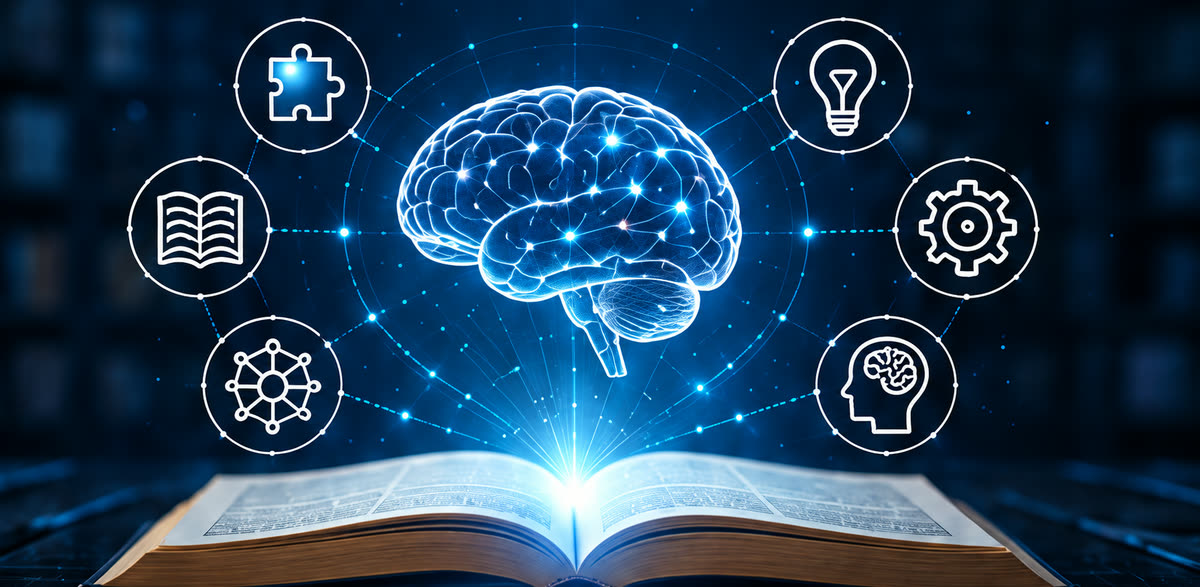
Memory is not simply the ability to remember. It is a complex process of learning, encoding, storing and retrieving information.
At IMSA, we introduce learners to the science behind memory and explore how attention, encoding, association, organization and retrieval influence what we remember and how effectively we can recall it.
Memory Science brings together insights from psychology, cognitive science, neuroscience and learning research to understand how information is learned, retained and retrieved.
Learning involves acquiring new information and integrating it with existing knowledge, while memory allows information or experiences to be retained and later retrieved.
Understanding these processes helps us move beyond simply studying harder and towards learning more effectively.
Memory works through a continuous cycle. Information moves through three essential stages.
How information enters and is processed by the mind.
How information is retained over time.
How stored information is accessed when we need it.
The quality of encoding, the way information is organized, the context in which it is learned and the opportunities to retrieve it can all influence later recall.
You cannot effectively remember information that you have not meaningfully attended to.
Connecting new information with what you already know can make it more memorable.
Structuring information into meaningful patterns can make it easier to learn and retrieve.
Visual representations can provide powerful additional cues for remembering.
Learning distributed over time supports better long-term retention than cramming at the last minute.
Actively recalling information is an important part of effective learning.
Better memory does not replace understanding. It supports it.
Students need to understand concepts, solve problems and think critically—but they also need to retain the knowledge they have learned so that they can use it when required.
Effective memory and learning strategies can therefore become an important part of a student’s overall learning toolkit.
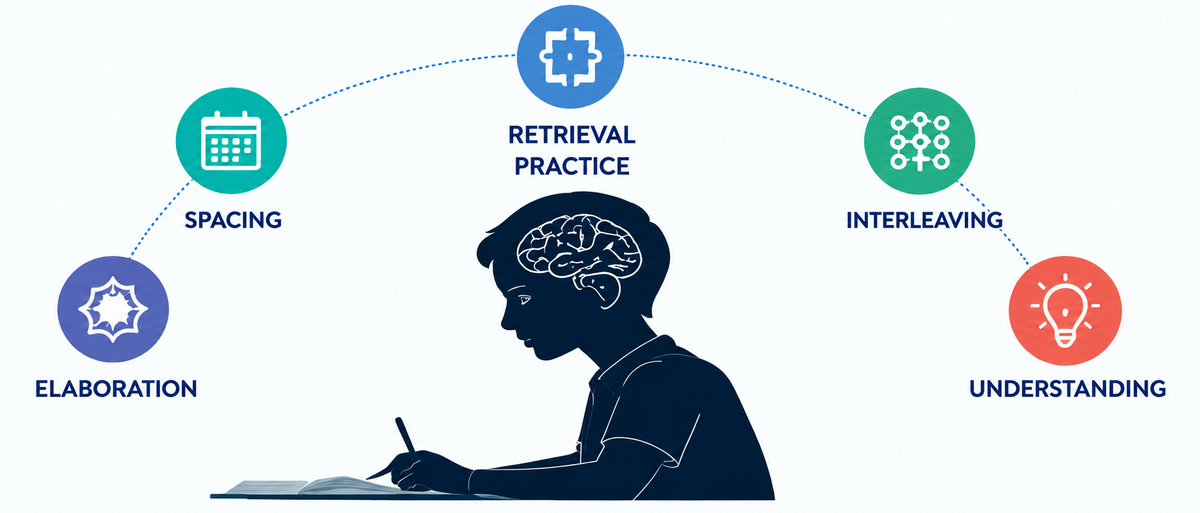
Research-backed learning approaches include retrieval practice, spacing, elaboration and appropriate interleaving.
When you understand how memory works, you can learn smarter, retain more and perform better in academics and in life.
Building a Culture of Memory in India through Memory Science and Memory Sports
Sharper Minds,
Brighter Futures…
Hyderabad, Telangana, India
LEARN | PRACTICE | COMPETE | GROW
An initiative of
Indian Memory Sports Foundation
Creating Opportunities. Building Communities.
Advancing Memory Science and Memory Sports.
© 2026 Indian Memory Sports Academy. All Rights Reserved.
Building a Culture of Memory